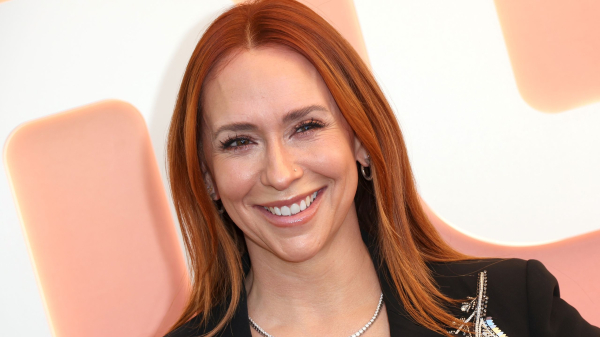
Jennifer Love Hewitt’s New Tiny Tattoo Would Do Numbers on Pinterest — See Photo
 Photo: Getty ImagesSave this storySave this story
You don't need a special meaning behind a tattoo, but for many people—Jennifer Love Hewitt included—our ink is inspired by the people, places, and things that matter most. For example, in 2023, she got an important reminder, “the universe always provides,” tattooed on her forearm, and in 2024, she got a tribute to her show, 9-1-1, in the form of a phone on her wrist. And she just shared the latest addition to her collection, which may just be her most heartfelt yet.
On her Instagram Stories, Hewitt shared an artsy black-and-white photo of the back of her wrist. There, a few inches above a cluster of bracelets, is a new, super-dainty tattoo: four little hearts, each one drawn a little differently, a little imperfectly. But when you know why, it turns out they're actually perfect.
“I had my husband and kids draw hearts for me,” Hewitt captioned the photo. “And now I can see them all the time." How sweet is that?
Hewitt tagged and thanked Orange, California, tattoo artist Audrey Glass, known for both fine-line tattoos and cosmetic tattooing like microblading and freckles.
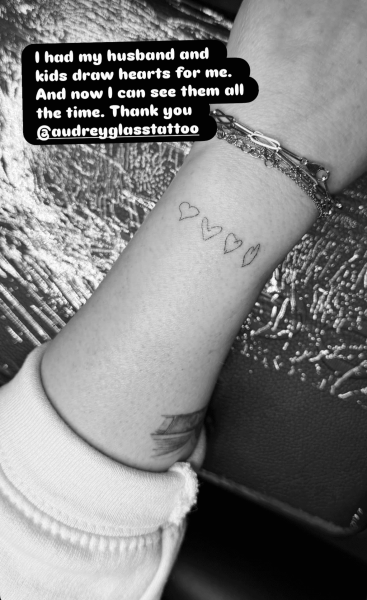 Photo: Jennifer Love Hewitt/Instagram
You have to admit, it's a lovely idea. It's very much in the same vein as handwriting tattoos, like Kylie Jenner's tattoo of her grandmother's name in her grandfather's handwriting, and Demi Lovato's tattoo of her mother's handwriting, reading, “I love you more.” And tiny hearts? This is bound to be collected all over Pinterest.
The great news is, even if you copy the idea, the hearts will always be unique to the people drawing them—and that's what makes this ink particularly special.

The ’90s Fluffy Bob Will Make You Excited to Get a Silk Press
 Getty ImagesSave this storySave this story
One of the best compliments I’ve ever received was being told that I looked “’90s fine.” My then-boyfriend said it as we were heading out for date night, and I knew exactly what he meant: that effortless, low-key sultry energy embodied by icons such as Halle Berry, Naomi Campbell, and Nia Long during that era. You might think the praise was referring to my outfit, but it had nothing to do with what I was wearing—it was for my hair. I had a freshly pressed, softly curled, fluffy bob that moved like silk, and conveyed just the right amount of drama.
“Bounce, volume, and playfulness are the hallmarks of the fluffy bob,” says Brenton Diallo, a hairstylist at Benjamin Salon in New York City, who’s been working behind the chair since the early ’90s. He recalls clients routinely bringing in photos of the great Whitney Houston and Tisha Campbell as reference points.
 Getty Images
“Soft, strategic layers are what give this cut its movement and fullness while keeping it light and bouncy,” says Alex Vann, a hairstylist and salon owner in Duluth, Georgia. “What makes it special is the lift at the root and those soft bends throughout the hair. It’s polished, touchable, and frames the face beautifully while still feeling effortless,” she adds.
Lead stylist at Twelve12 Salon, @hair.journies styling a fluffy bob.
Instagram / @twelve12salon
According to Diallo, the look was partly shaped by the tools of the era; heat-styling technology wasn’t as advanced at achieving pin-straight results on textured hair, so a silk press in the ’90s often yielded airy volume and soft fullness rather than the glassy, ultra-sleek finish that’s common today.
As trends tend to do, the fluffy bob has circled back around into the spotlight, though you could argue it never really left. Recently, Beyoncé debuted a bouncy, jaw-skimming blonde bob that promptly sent the internet into a tizzy. And if history tells us anything, her co-sign alone is enough to propel a hairstyle straight into trend territory. Says Vann, “That’s the energy we’re channeling with today’s fluffy bob, nostalgic but modernized.”
Ahead, pro hairstylists share their techniques for achieving this timeless look, plus the best tips for making your fluffy bob last as long as possible.
How to get a fluffy bob
“The cut itself is the foundation of the style,” Vann says. “To achieve the fluffy bob properly, soft layers must be added to create body, volume, and natural movement.” The stylist recommends booking an appointment for a layered bob haircut and bringing in reference images to communicate the exact look you want. After your cut (which usually happens after the hair has been washed and blown out), a classic silk press and pin-curl set (the large curls created with a barrel wand and held in place by clips) is the styling method that brings the fluffy bob to life.
According to both Vann and Diallo, the key to getting a great silk press actually begins at the shampoo bowl. “I always start with a clarifying shampoo to remove product buildup,” says Diallo. As for me, I typically reach for the Olaplex No. 4C because it strips away product without leaving my hair feeling parched.
Then, Diallo suggests, reach for a moisturizing shampoo. He “sometimes shampoos with this formula twice,” he explains, “to make sure the hair is thoroughly cleansed.” Residual buildup can completely sabotage your entire style, as it leads to a stiff, crunchy press instead of the soft, fluid movement a fluffy bob requires.
Diallo prefers the Davines OI Hair Softening Shampoo as his moisturizing formula. He used it on me recently, and I understood why: It leaves hair incredibly silky, and smells just as luxurious. At Vann’s salon, she relies on Pureology to achieve a clean and healthy base before styling: “We love Pureology shampoos and conditioners because they keep the hair strong and soft without weighing it down,” she says.
Youtube / @deeperthanhairtv
After the hair has been washed and conditioned, detangle and divide it into sections—six to eight is ideal, especially for thicker textures. Spritz on a heat protectant (Diallo stays in the Davines family, using the OI All-in-One Milk, which hydrates the hair, controls frizz, and preps the strands for heat). Next, blow-dry your hair in sections using either a comb attachment (I swear by the wide-tooth attachment on the Dyson Supersonic blow-dryer) or a Denman brush with a traditional dryer to stretch the hair. Both techniques create a soft, voluminous blowout; it simply comes down to personal preference and control. Vann prefers to use a round-brush blow-dryer, “lifting at the root and slightly over-directing sections for bounce,” she explains.
Diallo recommends using a hot comb or a pencil-thin flatiron at the roots and hairline only, leaving the lengths largely untouched. “Once I’ve straightened the roots, I’ll use a curling iron to create a full pin-curl set,” he says. Both Diallo and Vann prefer the added lift a 1-1⁄2-inch barrel curling iron provides. For a fluffy bob, the goal isn’t pin-straight sleekness but buoyant movement, so skipping an allover flatiron helps preserve airy volume while still smoothing frizz and texture. Vann says this is “the key is to create soft bends, not tight curls, and alternate directions for that effortless feel.”
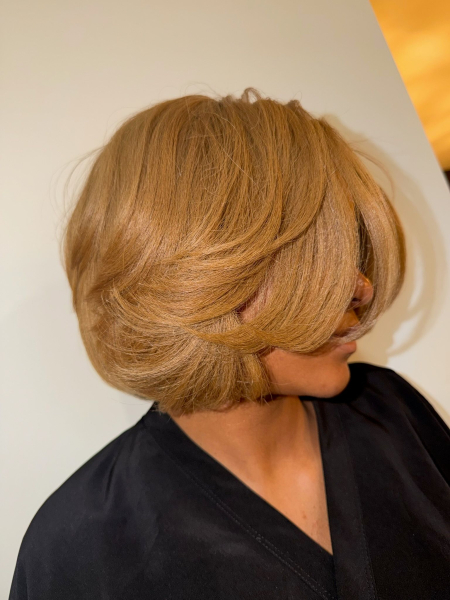 Instagram / @thealexvannexperience
After the pin curls cool and set, take them down, and coat your hands with a lightweight oil. Diallo reaches for the Matrix Food for Soft Oil to seal in moisture. “I gently shake out the curls with my hands before shaping with a wide-tooth comb,” he says.
The result is playful and touchable—a style meant to be flipped, tousled, and lived in. In fact, the more you move it around, the better it looks.
How to style and maintain a fluffy bob at home
One of the best things about a fluffy bob is that it requires minimal styling after the initial appointment—but proper maintenance is essential. “Every night, pin curl your hair and wear a bonnet with a silk band or a silk scarf to protect your edges,” says Diallo. When you remove the pins each morning, the curls should fall effortlessly, framing your face with soft, fluid waves that settle naturally as you shake your head.
If you stick to this routine, Diallo says, your fluffy bob should hold for about a week. Vann says you can even go two weeks, depending on your hair texture. Coarser hair types will likely revert faster. As the hair returns to its natural texture, the bob takes on an even fluffier, more lived-in look—think blowout rather than a polished silk press—which has its own charm. Stylists are already predicting that this airy, touchable style will be one of the defining hair trends of 2026.
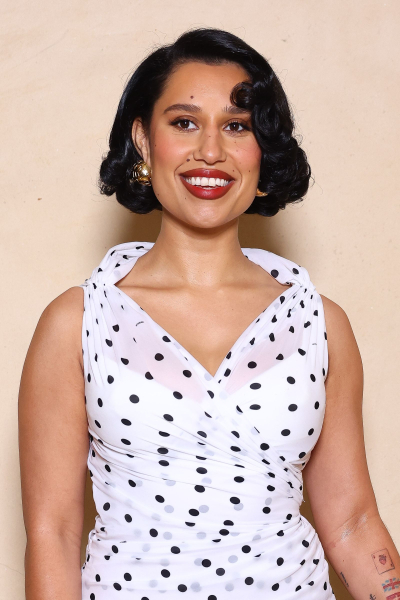
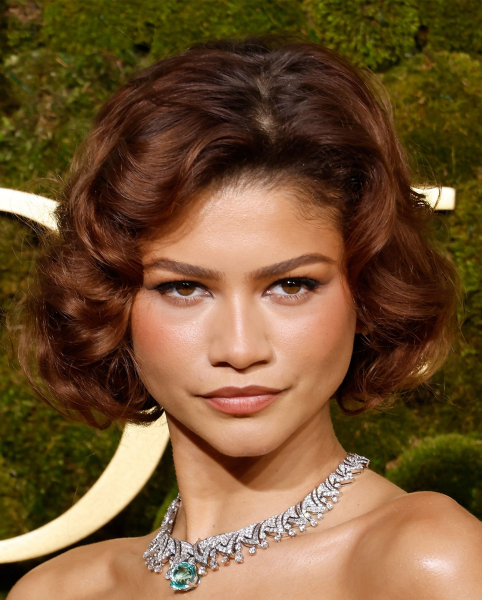
From red carpet classics to Instagram-ready crops, these are the fluffy bobs I’m saving for the next time I want that ‘wow’ factor.
Fluffy Bob Inspiration
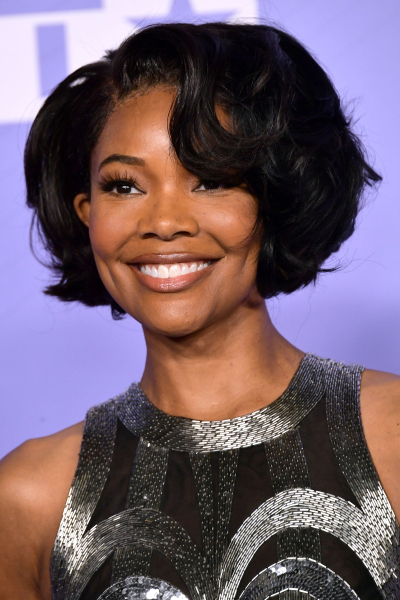 Getty Images
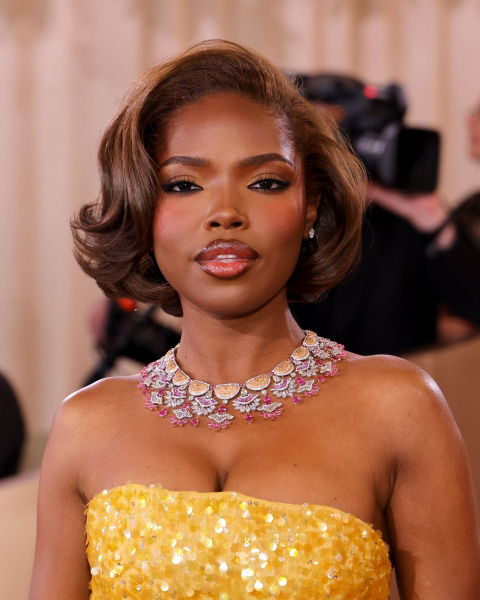 Getty Images
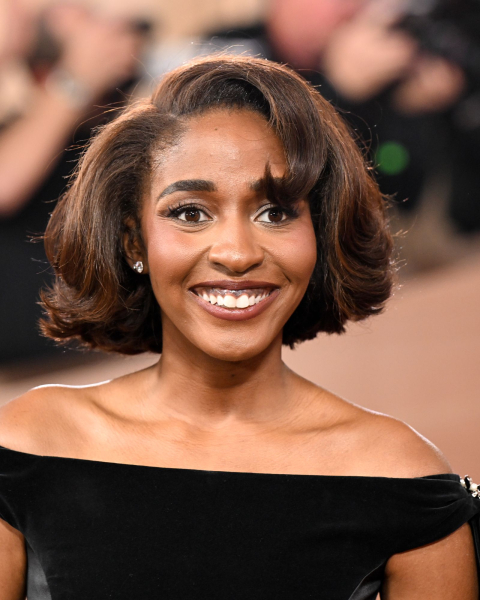 Getty Images
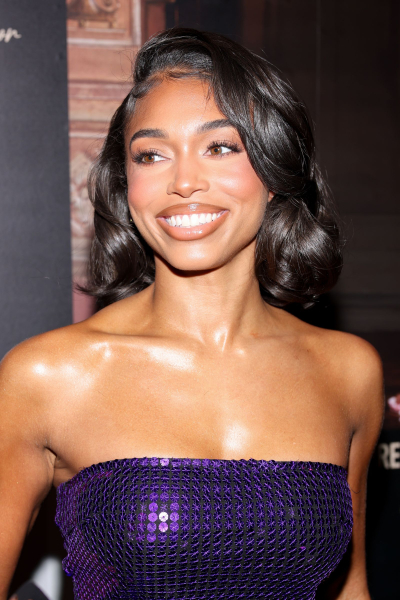 Getty Images
 Getty Images
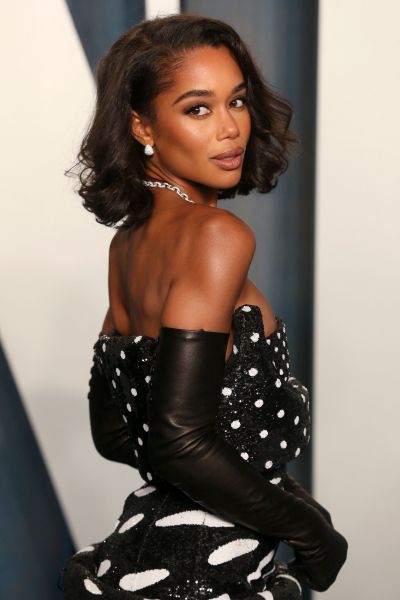 Getty Images
 Getty Images
 Getty Images
I Got Skin Removal Surgery After Losing 230 Pounds On a GLP-1
 Save this storySave this story
Perri is a 34-year-old New Yorker who started a GLP-1 in 2023 to reclaim her life. This is her story in her own words.
“The battery must be dead.” That’s what I thought the first time my Amazon scale couldn’t register my weight.
At five feet three inches tall, I weighed more than 400 pounds, which I confirmed after purchasing a medical-grade scale. I didn’t recognize myself in the mirror. Even worse I didn’t recognize my life. Seeing the number was one thing, but the lived experience—being unable to tie my shoes or walk a block without becoming winded—was something entirely different.
I was 31 years old and beyond the point of no return, I thought. My flag wasn’t just planted at rock bottom; it was cemented. Then, in April 2023, I decided to make a change. I started a GLP-1, a type of medication that aids weight loss, in part by causing food to move through the body more slowly and increasing fullness. Within days of my first injection, the screeching food noise that had always plagued me became a faint whisper. I hadn’t even worked my way up to a therapeutic dose yet, but I could feel the tides shifting. After treading water my entire life, I was finally learning how to swim.
I first became aware of my weight as a child, standing on the scale at the pediatrician’s office. I was eight years old—maybe younger. In that moment I realized I wasn’t just a girl who loved tennis and softball. My identity and personhood could also be tethered to a body and a number, one that would fluctuate but somehow remain an enemy throughout my life. When I look at photos from that time, I see a perfectly normal kid, yet I was treated differently. I’ll never forget how, at family events, I was handed salads while my cousins were served burgers.
This experience, and others like it, planted seeds of shame about my weight that, as I grew up, blossomed into a thorny and distorted relationship with food. I tried every diet and weight-loss program out there: the Master Cleanse (you know, the lemon juice, maple syrup, and cayenne pepper concoction endorsed by Beyoncé), Jenny Craig, and the like. In fact, it was Weight Watchers that (inadvertently) taught me to binge eat as a pre-teen; I would starve myself the two days before weigh-ins. After that my cravings would explode, and I’d overeat. The cycle would continue week after week. Similarly, after losing 80 pounds on a paleo diet, the weight all came back once I could no longer avoid the lure of grains and sugar. I had traded reckless excess for reckless restriction, and it was completely unsustainable. The pervasive stereotype that plagues folks in larger bodies is that fast food and ultra-processed foods are to blame. But it became clear that I had an issue with bingeing. No matter what diet I tried, I wound up overeating—even “clean” foods like grilled chicken and sweet potatoes.
Reaching my breaking point
During the pandemic my life took a turn for the worse. As the world began social distancing, I fell into isolation. My apartment folded in on itself—my bed was my home. The food noise in my head grew louder, and my binging worsened. I found myself at my unhealthiest and most miserable. I ordered nearly everything I ate. After all, I could barely clean my apartment without becoming breathless; I couldn’t even imagine going to the grocery store. I either stayed home or at my parents’ house. Those were the only places I felt safe. My personal life atrophied because the shame I felt about my health weighed so heavily on my shoulders. I completely withdrew from the world. I lost friendships because I didn’t have the capacity to show up beyond a phone call or text.
Looking back I realize I lived a double life. Personally, I was crumbling, but professionally, I was unstoppable. I led a large team at a media agency, and I never dropped the ball; I vowed never to let my weight affect my career. But as my mobility became more limited, I struggled to attend work events. My career is social—filled with lunches and happy hours for clients—but going to a restaurant or bar triggered my fight-or-flight response, with the voice in my head wondering, Will I fit in a seat? However, before I could spiral about that too much, I’d remember it was almost impossible for me to walk without becoming winded. If the night continued to a different location, I knew I couldn’t keep up. So I stayed home.
I knew I didn’t have much life left if I stayed on this path. My decision to start a GLP-1 wasn’t just about getting my life back; it was about saving it. I knew I wanted to lose 200 pounds, but processing that number felt insurmountable—a reminder of how much weight I had gained. But I told myself, Even if I lose 10 pounds, I will feel better.
I was prescribed Wegovy through a telehealth provider, who I worked in lockstep with to increase my dosage at monthly intervals, auditing my body’s response to the treatment along the way. There’s this misconception that GLP-1s are a magic shot that allows you to bypass the “hard work” of losing weight. Trust me, I put a lot of effort into my weight-loss journey, supporting the medication's effects with a nutritious diet and, as I regained mobility, consistent workouts. But I’ll be honest, there is a sense of magic for me—specifically, how the medication tempered food noise. Soon after my first injection, I stopped constantly thinking about my next meal. My relationship with food became healthy. For the first time in my life, I could eat in moderation. Instead of finishing an entire bag of M&M’s, I would eat a handful. I finally felt in control.
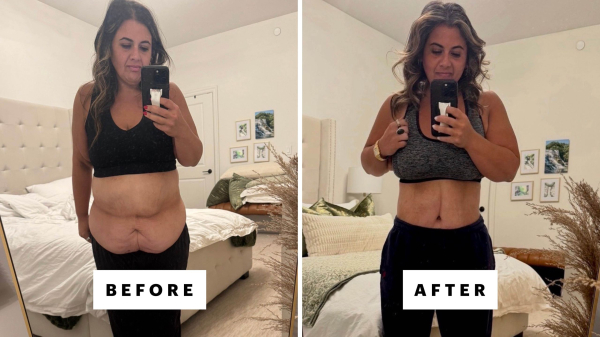
My chest tightened when I saw the loose skin that enveloped my new body.
In April 2024, a year after starting my GLP-1 journey, I was down 133 pounds. But once I lost 150 pounds, my progress stalled. My provider switched me to Zepbound, and my weight continued to drop.
The main downside was the nausea, which was consistent while taking both drugs. It was brutal, especially on the day after my weekly injection. Even commuting from my home on Long Island to Manhattan was a struggle some days when I was feeling particularly queasy. I relied on Zofran (a prescription medicine for nausea and vomiting), lean protein, and hydration to help keep the symptoms at bay. It was exhausting, but I was committed to doing whatever it took to reclaim my life. I knew I had momentum, and I refused to lose it.
As the number on the scale continued falling, I became more active. I could finally go to the gym, gaining even more momentum. I started working in cardio like swimming (easier on my joints at first), biking, and pickleball.
Seeing a plastic surgeon
Almost two full years later, I’ve lost over 230 pounds, going from a size 5X in shirts to a size medium and from a size 30 in pants to a size 6 or 8. Fifteen of those lost pounds were not from my GLP-1, exercise, or dietary changes but from something else entirely: skin-removal surgery. After years of hiding myself, I wanted to wear dresses and bathing suits but was confronted by the crepey, loose skin that enveloped my new body. My chest tightened when I thought about the progress I’d made, only to see that in the mirror.
My plastic surgeon, who specializes in skin removal on patients who’ve experienced extreme weight loss, performed a 360-degree lower-body lift in October 2025, contouring and removing skin from my hips, stomach, and butt. My abdominal wall had also separated because of my weight gain and had to be stitched back together. The surgery was eight hours long, and when I regained consciousness, I couldn’t even lift my foot without feeling pain. But the discomfort was well worth it. Now when I see my flat stomach—flat stomach!—I’m reminded that nothing is impossible.
As I write this I’m still recovering and waiting for the swelling to fully subside. I won’t see my final results for roughly nine months. And there’s more work to be done. Before the summer and after swelling subsides from my past surgery, I hope to have the excess skin removed from my upper body too. For now, though, I’m taking in my new 180-pound body at 34 years old, appreciating it and caring for it every day.
When I was still in the early stages of my journey, before I started dating again, booking last-minute flights to see the world I had cut myself off from, or skydiving (which I once considered impossible), I recognized something so mundane but so magical: I could walk up stairs without losing my breath. A nondescript everyday moment signaled that I wasn’t at rock bottom anymore. I had pulled myself out—step by step.